Sheet metal fabrication turns flat sheets of metal into the parts that hold modern products together: enclosures, brackets, chassis, panels, doors and frames. If you are sourcing sheet metal parts from China, this guide explains how the process works, which materials to choose, what to watch for in your design, and how to get an accurate quote.
What Is Sheet Metal Fabrication?
Sheet metal fabrication is the process of cutting, bending and forming flat metal sheet into finished three-dimensional parts. It starts with a flat sheet, usually aluminium, steel, stainless steel, copper or zinc, and ends with a part that is ready to use or ready for assembly.
It is one of the most cost-effective ways to make durable metal parts, because it uses standard-gauge material, needs little or no tooling, and works for anything from a single prototype to thousands of units. Typical applications include electronic enclosures, brackets, chassis, body panels, doors, kitchen equipment and office equipment, for industries such as automotive, medical devices, aerospace, electronics, energy and robotics.
For prototypes and small batches, sheet metal prototyping is often the fastest route from a drawing to a physical part.
The Main Processes
Cutting
Everything starts with cutting the flat pattern from the sheet. The three common methods are laser cutting, water jet cutting and plasma cutting. Which one is best depends on your material, the sheet thickness, the lead time you need and the tolerances your part requires. Laser cutting is the usual choice for thin to medium sheet: it is fast, accurate and leaves a clean edge.
Bending
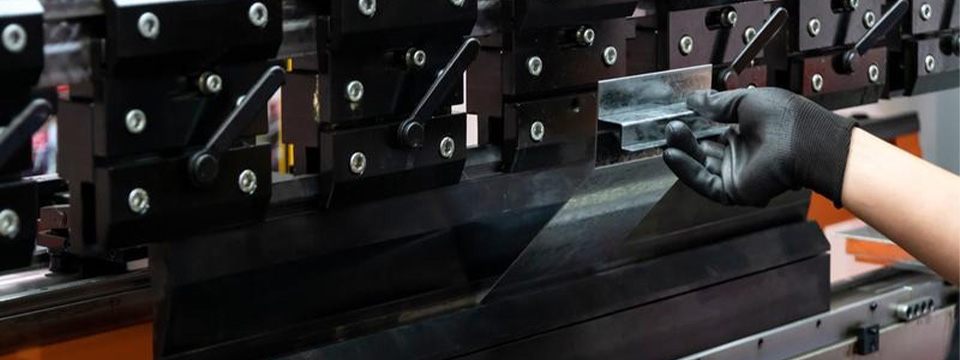
After cutting, the flat pattern is bent into shape on a press brake. Bending is what turns a flat sheet into a box, a channel or a bracket. The bend radius, the bend angle and the direction of the bends all affect the final part, so they need to be right in the drawing.
Punching
Punching presses holes, slots and other features into the sheet, often in the same step as cutting. It is fast and repeatable, which makes it a good choice for parts with many holes, such as ventilation panels and mounting plates.
Finishing
Most sheet metal parts get a finish after forming. Common options are bead blasting, anodizing, plating and powder coating, plus custom finishes on request. The finish protects the part against corrosion, improves its appearance, and in the case of anodizing or powder coating, adds a durable colour layer. You can read more about finish options in our guide to CNC machining and surface treatment.
Common Materials
The right material depends on strength, weight, corrosion resistance and cost:
- Aluminium — light, corrosion-resistant and easy to form. The most common choice for enclosures and brackets.
- Stainless steel — strong, corrosion-resistant and good-looking. Used for medical, food and outdoor equipment.
- Carbon steel — strong and low-cost. A good choice for structural parts and chassis that will be painted or powder coated.
- Copper — excellent electrical and thermal conductivity. Used for electrical parts, heat sinks and shielding.
- Zinc — good corrosion resistance at low cost, often used for small parts and hardware.
If you are not sure which material fits your part, send your drawing and describe how the part will be used. The supplier can recommend the most cost-effective option.
Thickness and Tolerances
Sheet metal is supplied in standard gauges, and the workable thickness range is roughly 0.006 to 0.25 inches (0.15 to 6.35 mm). Thinner sheet is easier to bend and cheaper to cut; thicker sheet is stronger but harder to form and more expensive to process.
Tolerances are looser than in CNC machining, and that is normal for the process. A common general tolerance for sheet metal work is around ±0.2 mm, with cutting features held tighter than bend angles. Two rules will save you money: only call out tight tolerances where the part really needs them, and put every tolerance on the drawing so the quote is based on the same numbers you are.
Design Tips for Sheet Metal Parts
A few design habits make parts cheaper to make and easier to get right:
- Keep the bend radius at least equal to the material thickness. A radius that is too small can crack the metal at the bend.
- Keep holes away from bends. A hole too close to a bend line will distort when the part is bent. As a rule of thumb, keep at least one material thickness between the edge of a hole and the bend.
- Use a consistent bend direction where possible. It reduces handling and keeps the part more accurate.
- Make flanges long enough to bend. A flange that is too short cannot be gripped by the press brake.
- Avoid unnecessary tight tolerances. Every tight tolerance adds inspection time and cost. Reserve them for the features that matter, such as mating surfaces and mounting holes.
If your part needs joining, such as welding or PEM fastener installation, ask your supplier whether they handle it in-house before you place the order, so the whole part arrives finished.
Prototyping vs Low-Volume Production
Sheet metal fabrication works for both ends of the quantity range. A single prototype proves the design and the fit before you commit to a larger run, and the same process scales to 1,000+ units with low setup costs. There is no minimum order: you can order one prototype or a full production batch from the same supplier.
Typical lead time for sheet metal prototypes is 5–10 days. That speed is one of the main reasons buyers choose sheet metal prototyping when a product is still being developed.
How to Choose a Sheet Metal Supplier
Before you send a drawing, check four things:
- Processes in-house. Cutting, bending, punching and finishing under one roof means fewer delays and one party responsible for quality.
- Materials and finishes. Make sure the supplier stocks the material and finish your part needs.
- Lead time and minimum order. Confirm the delivery time and whether a small quantity is accepted.
- Communication. A supplier who asks questions about your drawing before quoting is usually a supplier who will get the part right.
How to Get a Quote
To get an accurate quote, send a 3D drawing in STEP or IGES format (or a DXF for flat patterns), together with the quantity, the material, the tolerance range and the surface finish. If you have several parts, list them all in the project details, or upload them as a ZIP or RAR archive.
Request a quote from Dexin CNC — upload your drawing, and we will reply within 24 hours.