When you send a part out for CNC machining, one of the first questions is how many axes the job needs: 3, 4 or 5? The number of axes decides what shapes a machine can cut, how many times the part must be repositioned, and how much the job will cost. This guide explains the differences in plain language, so you can tell which one your part needs — and avoid paying for more machine than the job requires.
What Does “Axis” Mean?
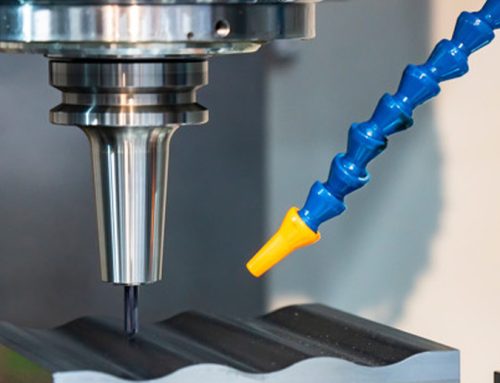
An axis is a direction the cutting tool or the workpiece can move in. A standard CNC mill has three linear axes: X (left and right), Y (front and back) and Z (up and down). The extra axes in 4-axis and 5-axis machines are rotary axes, usually called A, B and C, which rotate the workpiece or the tool around one of the linear axes.
More axes do not mean a better part. They mean the machine can reach more of the part’s surfaces without stopping to reposition it.
3 Axis CNC Machining
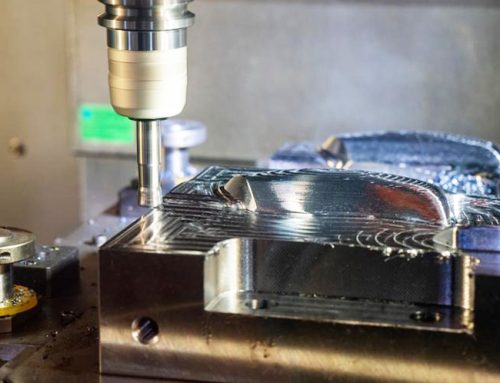
A 3-axis machine moves the cutting tool along X, Y and Z. It cuts from one direction at a time, usually from above. This is the most common type of CNC machine, and it handles a large share of all machined parts: brackets, plates, housings, covers, fixtures and other flat or prismatic parts.
Its strengths are simplicity and cost. 3-axis machining is the cheapest option, it is easy to program, and it is fast for parts that are mostly flat or have features on one side.
Its limits show up with complex shapes. A part with undercuts, deep cavities or features on several sides must be unclamped, flipped and re-fixtured, sometimes several times. Each new setup takes time and adds a small positioning error, so accuracy drops and the price rises. As a rule of thumb: if your part is mostly flat, or all its important features can be reached from one side, 3-axis is the right choice.
4 Axis CNC Machining
A 4-axis machine adds one rotary axis, usually the A axis, which rotates the workpiece around the X axis. The part can be turned while it is being cut, so the machine can reach features on several sides without a new setup.
There are two ways to use that rotary axis. In indexing (sometimes called 3+1), the part is rotated to a fixed angle, locked, and then machined as if it were a 3-axis job. In continuous 4-axis machining, the rotation happens while the tool is cutting, which is how cylindrical and curved features are made.
4-axis machining is the usual choice for parts such as impellers, turbine blades, screws, helical gears and parts with features wrapped around their sides. It costs more than 3-axis, but it replaces several setups with one, so for the right part it is faster and more accurate overall.
5 Axis CNC Machining
A 5-axis machine adds two rotary axes, so the cutting tool can approach the part from almost any angle. There are again two modes: 3+2 positioning, where the part is tilted to a fixed angle and then machined, and simultaneous 5-axis, where all five axes move together while cutting.
This is the machine for complex geometry: aerospace components, medical implants, turbine blades, moulds with deep cavities, and parts with curved surfaces and undercuts. Because the tool can stay perpendicular to the surface, it can use shorter, stiffer tools, which means less vibration, a better surface finish and tighter accuracy on complex shapes. Many parts that need four or five setups on a 3-axis machine can be finished in a single setup on a 5-axis machine.
The trade-off is cost. 5-axis machines are the most expensive to buy, program and run, so their hourly rate is the highest of the three. They are worth it when the geometry demands it, and a waste of money when it does not.
3 Axis vs 4 Axis vs 5 Axis: At a Glance
- 3-axis: moves in X, Y and Z. Best for flat and prismatic parts, brackets, plates and housings. Lowest cost, most setups for multi-sided parts.
- 4-axis: adds one rotary axis. Best for cylindrical parts, impellers, and parts with features on several sides. Medium cost, fewer setups.
- 5-axis: adds two rotary axes. Best for complex curved parts, aerospace and medical components, moulds and undercuts. Highest cost, often a single setup.
How to Choose the Right One for Your Part
Ask three questions:
- What does the geometry need? Flat parts with features on one side: 3-axis. Features wrapped around the sides: 4-axis. Curved surfaces, undercuts or features on many sides: 5-axis.
- What tolerance do you need? Complex parts that must hold tight tolerances in one setup usually point to 5-axis. For more on what tolerances mean and what they cost, see our guide to CNC machining tolerances.
- What is the quantity? For one prototype, the setup time matters more than the hourly rate, so fewer setups can win. For a large batch, the cheapest process that holds the tolerance usually wins.
A good supplier will tell you when a simpler process will do the job. If a part can be made on a 3-axis machine, there is no reason to pay 5-axis rates for it — and a supplier who suggests the cheaper option is one you can trust.
Which Axis Configuration Do You Need?
The number of axes is a tool, not a quality ranking. 3-axis machining covers most parts at the lowest cost. 4-axis adds rotation for parts with features on several sides. 5-axis handles the most complex geometry in a single setup, at the highest price. Match the machine to the part, and you get the right quality at the right cost.
Not sure which one your part needs? Send your drawing and let the supplier decide. Request a quote from Dexin CNC — upload your drawing in STEP or IGES format, and we will reply within 24 hours.